Black and White

Working with the Fuji X-Pro “Monochrome” | Don Craig

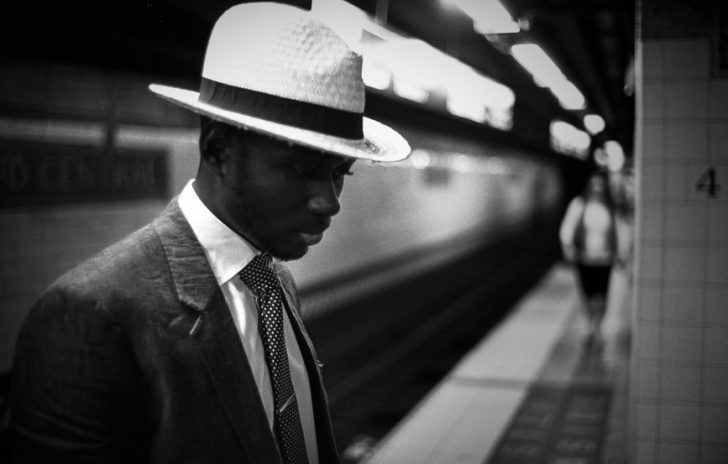
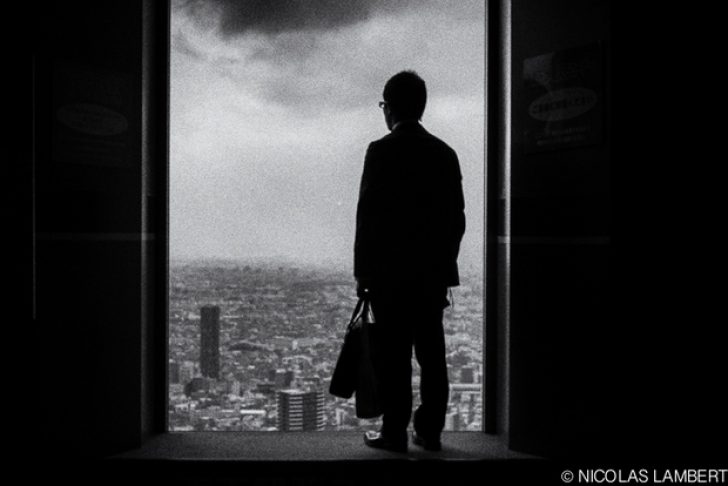
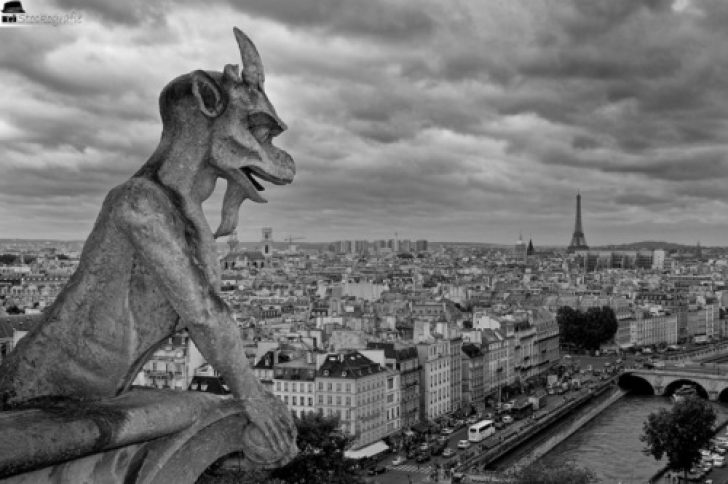
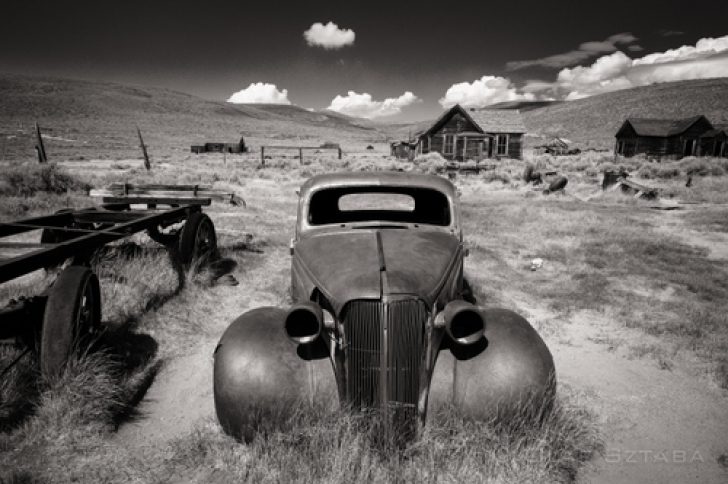
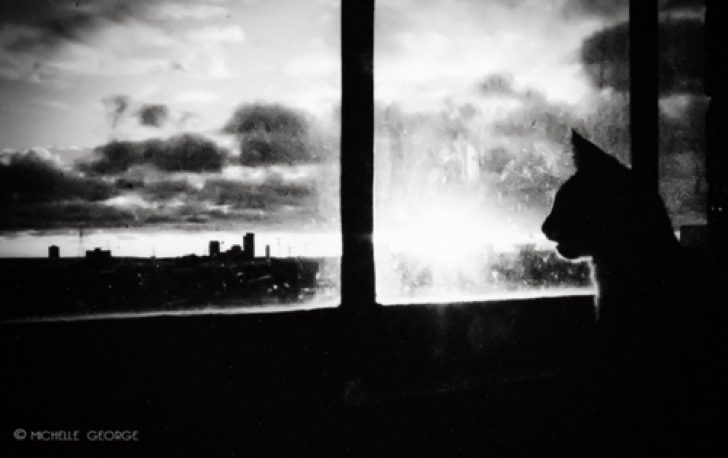
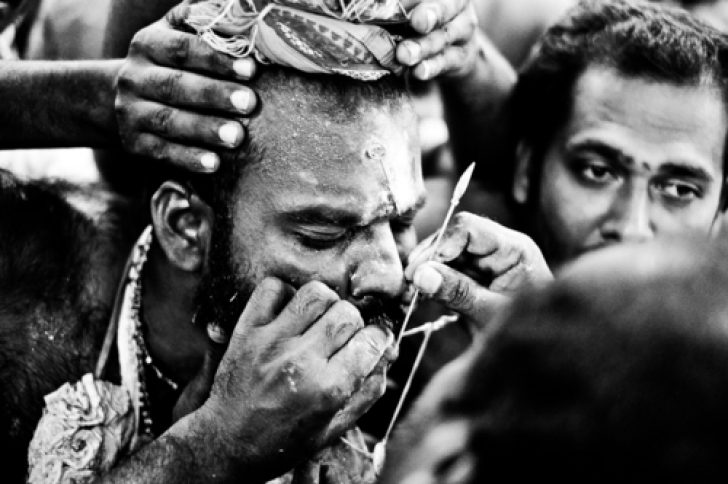
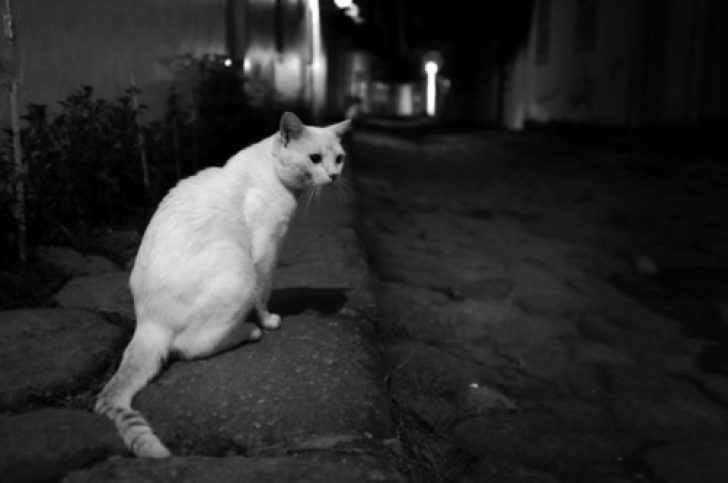
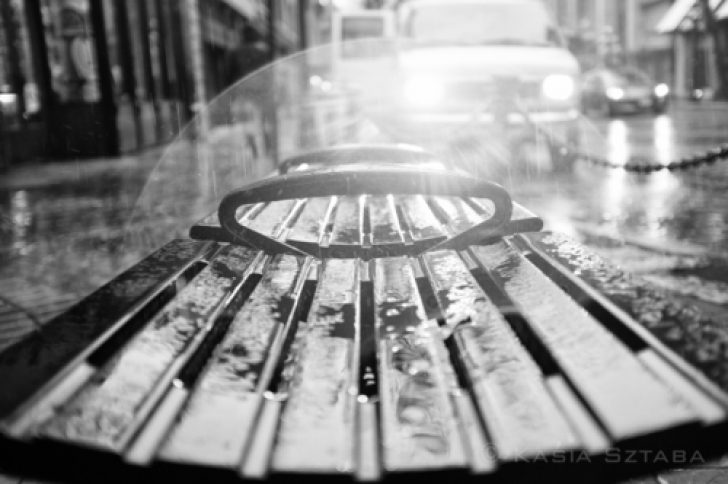
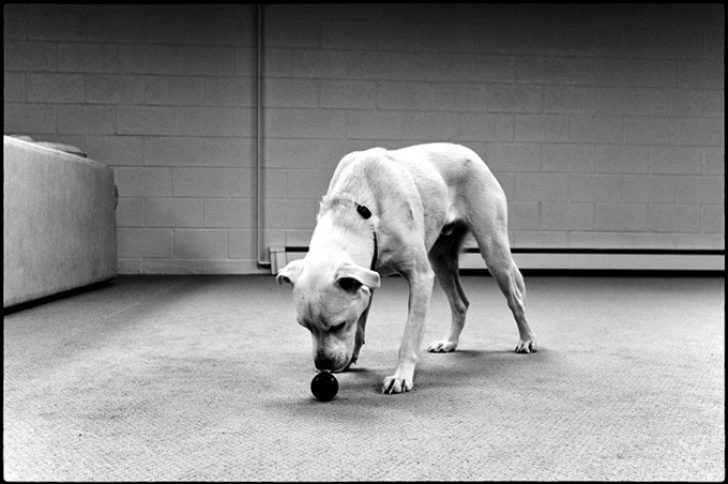
Black and white images shot with my X-Pro 1 “Monochrome” account for much of my photographic output. That includes my work photography.

Somehow, in a world where smartphone photos of dubious quality are uploaded minutes after an event ends, my black and white photos have become a welcome addition to the record of government activity. While I might be shooting an event with a DSLR, often with flash, I also carry my XP1 “Monochrome” with the 35mm or 18mm lens attached. This allows me to capture shots with available light and to work unobtrusively in crowds. Shooting wide open (or close to it) and at high ISO, the XP1 M produces fabulous monochrome images. Of course, unlike shooting with film or with that other, expensive Monochrome camera, I have the colour information available to me, since I shoot RAW. Typically, I set the XP1 M to shoot in “Monochrome” film simulation, whether or not I am also shooting small JPEGs along side of the RAW photos. This provides me with a monochrome image preview, so I get to see the photo in black and white. Once imported into Lightroom, I have multiple options for converting the photos into black and white. Having happily used Silver Effects Pro for a couple of years, I have migrated to VSCO Film because of their great support for X-trans files created with the XP1 M. This method also saves me disc space, as I don’t create another file as one does with SEP. Although this might be old news to some, it seems worthwhile to once again demonstrate the superior image quality of the XP1 files, be they “M”onochrome or not.

See more pictures on doncraigphoto.wordpress.com

People in DC | Karim Haddad

I’ve been trying to shoot more people lately. It’s not always easy though, especially for someone like me. I was raised to be considerate of others, so the cognitive dissonance that comes with traditional street photography is often hard to shake. Still, I persevere. I wait. I sneak around, or I distract and disarm. Then I take my shot. It’s never been ideal and every now and then I even need to shoot blind. Missed opportunities abound. I feel like a creep most of the time. But sometimes I’m not creepy enough. The other day, I had to eat my lunch at a restaurant while listening to some airhead ‘like’ talk endlessly about ‘like’ utter nonsense. I wanted to walk up to her, take a few shots, and then do some show and tell on here for everyone’s benefit. Maybe if it had lasted just a little bit longer… but I’ve already given her more props than she deserves! DC is full of interesting people. Some are more unique and ‘photogenic’ than others. The city itself is constantly evolving, but I have a feeling the cast of characters will remain largely unchanged. If I can capture some of these characters in this particular space and time, I’ll be satisfied. The most memorable street photos usually tell a story. Maybe I’m biased, but I’d like to think that most of the images below tell some kind of story. Some are obviously better than others. Surely I’m not lying when I say that I’ve come a long way from my last similar post… but I also know that I still have a long way to go. All of these pictures were taken sometime in the last few weeks with my Fuji X-Pro1. If you follow my blog, you know I only have the 35mm lens (for now). As you’ll see, I still haven’t been able to get very close to my subjects. I’m not sure that I’ll ever be comfortable getting up in someone’s face for a candid shot, but I’ll keep trying to move closer. And I’m still getting a wider lens, although I’m not sure which one yet.

See more pictures on blog.karimhaddad.com

Black and White on the Fuji X-Pro1, its really good | Keith Low


Weeks of shooting lead me to more understanding on this beautiful camera, the more I struggle with it, the more I am attached to it. And I am particularly please on the black and white rendering on the Fuji X. All pictures OOC jpegs  (aka “out of camera”) , with monotone mode of the camera, I have already set some custom sharpness, contrast, highlight and shadow tone adjustment from the camera.

See more pictures on www.keithlowphoto.com

Room 517 | Dave Kai Piper

Late Night shoot with the effortlessly stunning Chloe-Jasmine Whichello featuring Lingerie from Fred & Ginger, Dresses are by the lovely Claudette Joseph.

As this was a very unplanned shoot, in fact  zero planning whatsoever,  Chloe-Jasmine found ourselves shooting one evening as I still had the Lingerie with me from a shoot the day before. The Fuji X-Pro always is with me and it was lucky that I also had my Nano Lighting with me also. Totally loved how well it all came out in the end!

We thought we would try something a little ‘Newton’ ish…

See more pictures on www.davepiper.org.uk

Food for thought | Mark Rosales | Los Angels Times


As part of a project focusing on public transportation, Mark Rosales caught this photo of pensive bus passengers and the reflection of a pizzeria on Feb. 19 at the corner of Broadway and 8th Street in downtown L.A. He used a Fujifilm X-Pro 1 with an Olympus OM 24mm Prime Lens.

Rosales typically shoots through the windows of subways and buses, and always asks himself where his subjects are coming from and what their stories are.

“Such a mix of people all coming from different places that led them all to such a confined space and every each one of them going to their own different destinations,” he wrote. “You never know what you’re going to witness.”

Visit Mark Rosales website:
http://www.bazaarinruins.com/

See on latimesblogs.latimes.com

First week with the Fujifilm X-Pro 1 | Tom Barnes

I’ve had the Fujifilm X-Pro 1 about a week now, so far I’m very pleased with it, battery life isn’t great but apart from that this camera is blinding. The main lens I’m using (35mm 1.4 Fujinon) is sharper than my L series lenses and the pics have a great feel to them, it is almost worth noting that the high ISO performance of this little camera is astounding. This camera was bought to replace my old film Nikon FM2 with a 50mm f/1.2 lens which took truly fantastic pictures, this is coming close to that and I no longer have to sit for hours scanning negatives in. The images below are just a few grabs from the past week…..

See on tombarnesphoto.com

Zone Focus Test With the Fujinon 14mm Lens | Gene Lowinger

Wow, was it ever cold in New York on Sunday! The wind chill was brutal, but I was itching to try some focus tests and I was blown away by the results. But first some clarification. Hyperfocal distance is the closest distance that a lens will be in focus and still be able to keep focus at infinity reasonably sharp. Zone focusing requires that the lens have distance indications on its barrel for each appropriate aperture setting, thus allowing the photographer to set the range of distances within which any objects will appear reasonably in focus. When I shot film in my Leica M6 I often used zone focusing, but rarely  the hyperfocal distance. With a very wide angle lens, such as the 14mm, I’m shooting to create a perception of great depth, I don’t really care that objects in the far distance are out of focus. But when I shoot street, and especially when shooting from the hip, sometimes the autofocus on the camera either doesn’t understand what I want to be in focus (it’s often an object or person at one side of the frame, while the focus point for the sensor is set for the center of the frame) or the autofocus lag (even at 1/10th second) misses the shot. The first case scenario happens more than I’d like, the second case much less often – so much less that it’s not even worth considering.

When I decided to run this test I wanted to err on the side of caution, so I opted to shoot part of the afternoon in autofocus, just to make sure I’d get some good shots to show for my afternoon of braving the cold. The zone focus shots were taken at f8 (less than that would have narrowed the depth of field unacceptable for the test) and 1/250th second, which put my exposures in the high ISO range – not a problem for the X-Pro1 processor. Here’s a calculator to play with to discover acceptable in-focus distances. Remember that this calculation has nothing to do with the quality of the lens, the parameters that affect the calculation are the lens focal length, the aperture setting, and the distances involved. All the rest is pure physics and math. If I set my 14mm lens at f8 and the focus at a distance of 4 feet, my nearest acceptable in-focus distance will be a tiny bit over 2 feet away and the farthest will be 243.5 feet. If I set the focus point for 1/2 foot closer, 3.5 feet, that range drops from 1.9 feet to 24.9 feet. So to achieve a difference of about 1/10 foot closer, I’d have to loose about 220 feet in distance. Given the way I shoot, in close, I’d go for the closest possible I can get and still bet some reasonable distance focus. Even at a focus point of 3 feet I can get an acceptable image from 1.75 feet to almost 10 feet. That last zone is probably the best for me. That’s why I love using very wide angle lenses. I would suggest to anyone that they play with this calculator to get a feel for how the calculations work, so that out in the field there is a lot less guessing. If you happen to be a math wizard, you might want to make note of these formulae and when your out in the field do your own calculations (while I take the pictures)….

See on genelowinger.blogspot.de

Walking around town taking pictures | Karim Haddad


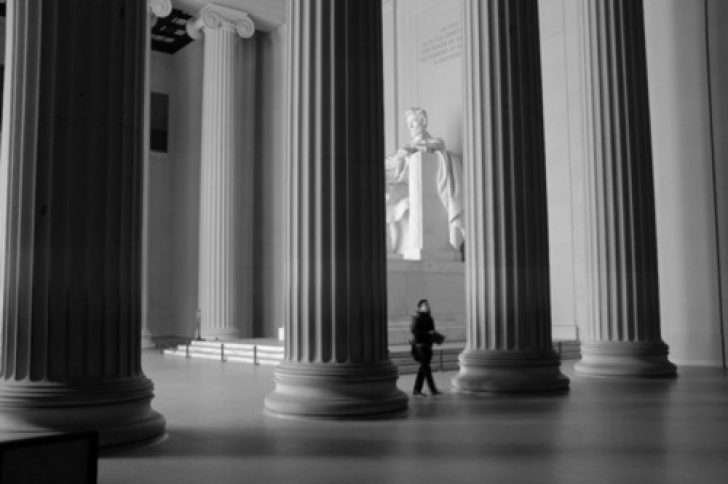
It’s not something I’m used to doing. But every now and then, it’s good to get out of your comfort zone. Most of my photography so far has been rooted in travel. I’ve taken quite a few pictures in the DMV, but the majority of them have been urban landscapes near tourist spots. I took my new Fuji out with my 5D recently to the Lincoln Memorial. Both performed splendidly, but there was something special about the look of my Fuji photos, even the ones that weren’t necessarily  the best of the shoot. I can’t wait to take my new camera with me on a trip overseas. Although the X-Pro1 is not pocket size, it’s a lot easier to carry around with than a dSLR. Even after I buy new lenses, I can still carry the whole kit around in a small bag. It also makes me want to take pictures of the most mundane things in my neighborhood that I hadn’t bothered to look twice at before. I’ve started to look around more. I’m not a street photographer by nature, but I can see myself moving further in that direction. It’s different. Usually I like to take my time composing shots and exerting as much control as possible. On the streets you have to react quickly and you have very little control over anything. It’s not just about shooting in the streets…especially not walls and windows. It’s about shooting anywhere in public, anywhere that gives a sense of what life might be like in that time and place. One of the best places for that is any city’s public transport system. But for those used to framing photos without people in them, this can all be quite a challenge sometimes. Getting shots of people is tougher than you might think. First and foremost, you need to know your camera – using it should be second nature, as if it was a part of your body. Luckily, the X-Pro1 helps with that. It’s only big draw back is the clumsy focal point selection system. Framing shots and getting them in focus can be difficult when you need to move fast. I need to work on my stealth, so I can do my thing without coming off as a weirdo. I don’t know whether to smile more, or focus on discretion. The key to taking pictures of people publicly is doing so smoothly. Whether your shooting faces or silhouettes, you need to be like a shadow in the corner. Ideally, you don’t want your subject to notice until it’s too late. But stealth isn’t the only challenge. Movement can also stand between the shooter and the shot he seeks.You can be walking down the street and notice the perfect shot in your peripheral; by the time you get your camera up and fram your shot, it’s either too later or you’ve blown your cover. Other times, your subject is moving in a way that makes it difficult to get the shot. Every now and then you have no control over your motion, like when you’re in a moving vehicle. Timing becomes crucial. One of the funnest things about shooting in the streets is the unexpected result. Any shot that conveys the feeling of the moment is usually a keeper (at least in the eyes of the photographer). Not all memorable shots are perfectly framed or well focused. A close up candid of an old wrinkly face is nice, but sometimes a more abstract shot can be just as powerful, especially when it tells a story… no matter how vague……..

See more pictures on blog.karimhaddad.com

Fujifilm Expedition Kambodscha | Peter Hawk

Fuji Expedition with the X-E1

Visit Peter`s Website:
http://www.peter-hawk.com/

See more pictures on www.facebook.com

A New Toy | Gene Lowinger

Oh goody! I just received my Fujinon 14mm f2.8 lens today. I’d been waiting for it since September. Hopefully, if the temperature is not too brutal for my old bones, I’ll get out and shoot with it this weekend. When I was shooting film with my Leica M6 my favorite lens to use was the Leica 21mm, the equivalent to the Fuji lens in focal length. So I’m going to have a chance to dig deep into my bag of tricks (that’s a euphemism for trying to remember old techniques). We shall see…..

Both these shots were made with the 18-55mm zoom lens. I would like to have been able to zoom out wider for the first image, but street happens so fast that’s not always possible. Would have been a much better shot with some space at the top of the frame. But I still like her expression. I caught this gentleman with the very cool beard on 34th Street just after leaving a critique session at B&H Photo. There’s just something about facial hair, whether on a man or woman, that’s so much fun to shoot.

See on genelowinger.blogspot.de

Page 2 to 612345...Last »