Fujifilm Fujinon XF 18-55mm f/2.8-4 OIS

Shooting with the Fujinon XF 18-55mm f2.8-4 R LM OIS | Bert Stephani

A few days ago I received my Fujifilm X-E1. As exciting as receiving a new camera may be, I was even more excited about the lens that came with it: the Fujinon XF 18-55mm f2.8-4 R LM OIS. Because I was hoping and expecting this lens to make my Fujifilm kit more flexible and all round for those times when working with primes might be too slow. Yesterday I joined another group of hunters for my “hunting project” and I decided to shoot exclusively with the new lens to give it a challenging workout in the field. The 18-55 works perfectly fine with the X-E1 and the combination is easy to handle. But I found the lens to handle better on the slightly bulkier X-Pro1. The lens doesn’t have the typical cheap feel of a kitlens. It feels sturdy and well build. The zoom action is smooth and the other controls work fine too. I’d just like a bit more friction in the aperture ring. It’s easy to accidently change the aperture without noticing it. Because this is a variable aperture lens (from f2.8 at 18mm to f4 at 55mm) there are no aperture markings on the lens like the Fujinon prime lenses. It would have been nice off course to have f/2.8 over the whole range but that would have made the lens a lot bigger, heavier and more expensive. I’ll have to get used to it but I can live with it. The Fuji’s made me rediscover the joys of working with fixed focal lengths and I intend to shoot most of my future work with those fine primes. But sometimes you get in situations were your movements are restricted and you just can’t zoom with your feet. Other times time pressure or dusty/wet conditions prevent you from changing lenses. Standard zoom lens to the rescue. Variation is often key in keeping clients happy and offering a wide AND a close shot of the same scene within seconds can definitely buy you some good karma from editors and designers. You know that this blog is not the place to read about resolution charts and corner performance. But I trust my eyes and I see that the Fujinon 18-55 produces great images which are sharp and clean with no obvious flaws. And I wouldn’t hesitate for a nanosecond to use this lens for any job within it’s focal range. Colors, contrast, bokeh seem pro-level to me…..

See more pictures on bertstephani.com

New York update 2 more on the A99 and Fuji | Frank Doorhof

How is the sharpness of the Fuji 18-55 lens
Well according to some people all zooms are “evil” and only primes are great, well I don’t agree…. I do find that GOOD primes are sharper than most zooms, however I find primes for street style photography rather limited and in the end it’s all about getting the shot. And let’s be honest in the studio primes are great but on the street I think they aren’t, and let’s look at the focus point of the Fuji series……yep it’s the perfect travel/street syle camera. Now some people will not agree about this prime story from me, but imagine it like this “Sometimes you want to show a whole person, sometimes just a face, with a prime you can’t switch that fast (change lenses), with a very good zoom this problem is solved.

How is the focus in the X-E1
VERY VERY good, since the 2.0 upgrade the X-pro1 was already a huge improvement, and for my “Feeling” the X-E1 seems a bit faster and more accurate, but I would have to have them next to each other, this however…. proves that Fuji is making a very fine camera with the E-1M. It’s a street photographers dream camera.

How is the EVF
Well this was something I was very afraid off in the start but seeing the fact I was already used to the Fuji cameras my “switch” to an EVF was much less problematic than I thought. For the Sony I can say that the EVF is VERY fast, it’s a very accurate tool for seeing what you’re doing, and then you press the shutter button and you have what you see, I call it WYGISWYS (What You Get Is What You See). For the X-E1 the story is about the same, the EVF looks really good and is very fast, I would have to do a test side to side to make a real decision but how the EVF performances now….. I think both do MORE than fine with an EFV. Do remember you will have to get used to the EVF, but if you do, there probably is no turning back.

Part 1 of Frank’s trip to New York

See on www.frankdoorhof.com

Impressions of the Fujinon XF 18-55mm F2.8-4 lens |
Simon Goldsworthy

This is a very good lens and should be in any self respecting Fuji X-Pro1 or X-E1 owners bag. It feels solid and is very well screwed together. I’ve had rubbish weather to test out this lens and I’m upset I cannot replicate the very bright conditions on Sunday when I first road tested the lens. Nonetheless the rubbish weather has enabled me to confirm the lens OIS works well…

Using it with the X-Pro1 OVF takes some getting used to in that the size of the frame is tiny at full zoom. That say, it is perfect for action shots as you can see what is happening around the frame. I didn’t mind using it with the OVF in that way but I preferred to use it with the EVF. The lens has a fast and (scarily) quiet auto-focus mechanism and uses an internal focusing system, which means the front element and filter thread does not rotate on focus. Focus speed is very good, much better than any of the primes except the 18mm, and I suspect the original primes will be quietly upgraded to use the linear motors used in this lens over time. However, sometime the 18-55 feels more inaccurate at focusing than the primes. This seems to be some that was addressed in firmware for the primes so I wouldn’t be too worried about it right now. The lens is very sharp and compares well with constant aperture zooms I have used. By way of comparison I think it compares favourably to the 12-35 for M43s in that it is almost as quick to focus, is ultra sharp (though the sensor helps here) and the OIS is very good. Also the 12-35 suffers badly from CA on Olympus bodies. The 18-55mm only really loses out because of its aperture – ultimately the 12-35mm is better in low light because of that. Distortion isn’t too bad and is only really noticeable for me at 18mm (note, distortion is corrected in body). There is some barreling at 18mm, but no pincushion distortion I noticed at the 55mm setting. Bokeh is very good at 55mm but is a little busy at 18mm. Vignetting is not a problem. Quibbles aside this is a very good lens and is a steal for the £529 I’ve seen it advertised for. Basically, get it as soon as you can. You won’t regret it!

See on sgoldswoblog.wordpress.com

Long Exposure Photography with the Fujinon 18-55mm lens |
David Cleland

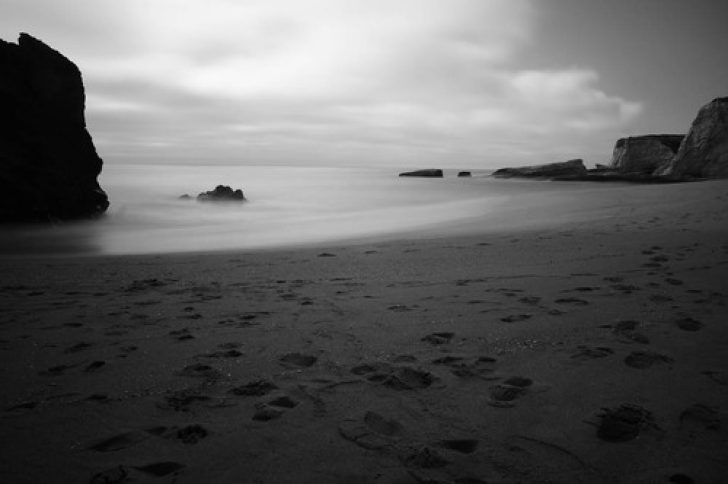
I was asked my opinion on how the Fujinon 18-55mm zoom lens would fare in Long Exposure Photography setting. Equipped with my trusty tripod I thought I would capture a few very quick test shots using the Fuji XE-1 and 18-55mm lens. I headed to the my favourite location and the one I used for the cover of The Long Exposure eBook. Without any ND filters I shot a series of long exposure images between F/18 and F/22 shooting at up to 3 seconds with an ISO of 200. This image is straight out the camera with no post processing.I am shooting RAW with the X-E1 and have noticed that Lightroom 4 crops the X-E1 RAW files on import. It is easily fixed by clicking the “Crop Overlay” tool in the Develop module and setting the size to be “Original”. I did put the 18mm (prime) lens on the camera with ND10 filter attached but I actually found I missed the OVF of the X-Pro1 for final framing. It is probably something I will get used to but the real joy has to be just how light the X-E1 is to carry around, it is definitely noticeably lighter than my X-Pro1 (which isn’t exactly heavy!). It was liberating to be able to use the zoom lens to frame the shot. With a prime lens the photographer has to zoom with their feet which has obvious limitations at the base of a fast flowing waterfall. With the zoom lens I was able to get tighter (towards the 55mm end of the lens) and retain the f/22 aperture using the manual aperture mode (switch on side of lens).

Using the Zoom. You can view larger version of the photos featured in this post over in the flickr set. I was really impressed at the quality of the images even if they are only 2 second exposure captures at f/22.

If you want to learn how to capture long exposure images with any camera system then check out The Long Exposure ebook http://www.flixelpix.com/featured/the-long-exposure-photography-ebook/

See on www.flixelpix.com

Fujinon Super EBC XF18-55mm f/2.8-4 R LM OIS lens | Photo Review

The compact Fujinon Super EBC XF18-55mm f/2.8-4 R LM OIS lens is the first zoom lens for X mount camera bodies. Covering the same angles of view as a 27-84mm lens in 35mm format, it has a maximum aperture range of f/2.8 to f/4. The all-glass lens structure consists of 14 elements in 10 groups and includes three aspherical elements and one extra low dispersion element. A seven-blade rounded diaphragm and a minimum focus distance of 18 mm enables close-up shots to be produced with attractively blurred backgrounds and the perspective that characterises wide angle lenses. A fast linear focusing motor takes advantage of the high-speed signal readout of the CMOS sensor and the newly developed EXR Processor Pro to enable contrast-detection focusing in as little as 0.1 seconds. Autofocusing is also virtually silent, enabling the lens to be used for video recording. The optical and mechanical designs of the lens are optimised to keep it compact at only 65.0 x 70.4 mm (in the wide position). The lens is equipped with an aperture ring and includes a built-in Optical Image Stabiliser (OIS) with a claimed advantage of up to four f-stops of shake reduction.


Conclusion
In terms of build quality and performance, the Fujinon Super EBC XF18-55mm f/2.8-4 R LM OIS is decidedly superior to the average kit lens and very pleasant to use. All the common aberrations have been addressed effectively and centre sharpness is excellent, with edge softening admirably low.

Focusing and zooming are smooth and quiet enough to be used while recording movies and internal focusing enables filters to be used without hassles. The only disincentives are the relatively high price and the fact that only two camera bodies can accept it.

Buy this lens if:

  •  You want capable general-purpose lens for Fujifilm interchangeable-lens cameras.
  •  You require good edge-to-edge sharpness.
  •  You want fast and quiet autofocusing and zooming.
  •  You require built-in image stabilisation.

Don’t buy this lens:

  •  For macro photography and extreme close-ups.
  •  If you’re concerned about size and weight.

See on www.photoreview.com.au

Fujifilm X-E1 met 18-55 F/2.8-4 ervaringen | LightCatch

Zo zat ik al tijdje te wachten tot de Fujifilm X-E1 geleverd ging worden, krijg ik gisteren een mailtje dat ie binnen is. Hup in de auto en meteen opgehaald. Ik heb ook een tijdje de X100 mogen gebruiken wat een prachtige camera is en die heb ik met veel plezier gebruikt. Een (voor mij) groot nadeel was het ontbreken van een zoom mogelijkheid. Als je kunt lopen is dat geen punt, dan zoom je met je benen, maar dat kan ik niet meer, dus dan moet je het anders oplossen. En zie daar, Fuji heeft het ook door gehad en speciaal voor mij de X-E1 op de markt gebracht. Op de X-E1 zit je niet vast aan één objectief. Met de X-pro1 overigens ook al niet maar er waren in eerste instantie maar drie objectieven uitgebracht en alle drie met een vast brandpunt. Ook is de X-pro1 een stuk duurder. Daar is samen met komst van de X-E1 verandering in gebracht, Fuji heeft tegelijkertijd een zoomobjectief op de markt gezet met een bereik van 18-55 mm (27-82,5 mm eq. 35mm) en een behoorlijke lichtsterkte van F/2.8 bij 18 mm en oplopend tot F/4 bij 55mm. De eerste indrukken (en ik ontkom niet met regelmatig een vergelijking met de X100) zijn erg goed. De bouwkwaliteit is fraai, degelijk en toch niet te zwaar. Dat geld ook voor het zoomobjectief, alles loopt erg soepel maar ook weer niet tè. Het totaal gewicht is lager dan ik van te voren had verwacht, maar wel erg prettig. Je hebt nooit het idee een prul in je handen te hebben. Wat absoluut beter is, is de AutoFocus. Die kon bij de X100 nog wel een pittig de weg kwijt zijn. Ik wil niet zeggen dat het bij de X-E1 allemaal rozengeur en maneschijn is maar in ieder geval stukken beter. De bediening is, als je de X100 gewend bent, niet zo heel afwijkend. Waar ik wel aan moet wennen is de AE-L/AF-L knop, die gebruik ik namelijk voor snelfocussen waarbij de AF verder op manual staat. Handig want dan wordt er bij het aanpassen van de compositie niet telkens opnieuw scherpgesteld als je de ontspanknop weer eens een keer teveel half indrukt. Alleen die knop zit precies bovenop de verdikking achterop het toestel waar je de camera zo lekker stevig mee vast kunt houden (ook een verbetering t.o.v. de X100). Echter als je de AE-L/AF-L in wilt drukken verlaat je duim dus het verdikte gedeelte waardoor je grip om zeep gaat…..

Google translater (ENG)
 
See on www.lightcatch.nl

Fujifilm XF 18-55mm F2.8-4 R LM OIS Review | PhotographyBLOG

The Fujifilm XF 18-55mm F2.8-4 R LM OIS is much more than just a standard kit lens. It’s remarkably sharp in the image centre almost throughout the entire focal range, except at full 55mm telephoto where optimum sharpness isn’t achieved until f/8. Similarly edge sharpness is also commendably high at most settings, with the same exception of the 55mm focal length. The fast maximum apertures of f/2.8 at 18mm and f/4 at 55mm make it easy to creatively throw the background out of focus, with the seven-blade iris diaphragm achieving some appealing bokeh effects. Vignetting is practically a non-issue, and chromatic aberrations are present but very well-controlled. There is some barreling at the 18mm wide-angle focal length, but no pincushion distortion of note at the 55mm setting. The lens’ macro performance is rather unremarkable but its close-focus point of 30cm still comes in handy when including a foreground interest in the image, as you often do in landscape and architectural photography. The lens also benefits from a fast and quiet auto-focus mechanism, generously wide zoom ring and a welcome aperture ring which makes it quick, easy and precise to set this key element of exposure. The lens mount is, thankfully, made of metal and, thanks to an internal focusing (IF) system, the front element and filter thread does not rotate on focus, which is very good news for those using polarisers and ND grads on a regular basis. The only real fly in the ointment is the price – at around £599 / $799 this isn’t exactly a cheap lens, which may hold back many enthusiasts, especially in the current economic climate. Compared to a similarly specced DSLR lens with fast apertures, however, it could be viewed as something of a bargain, especially when you consider that the Fujifilm 18mm and 35mm primes are even more expensive. And if you’re looking to buy a body to go with it, then the new X-E1 and 18-55mm kit is a veritable steal.

Ratings (out of 5)
Design: 4.5
Features: 4
Ease-of-use: 4.5
Image Quality: 4.5
Value for money: 4

See on www.photographyblog.com

X-E1 arrived! Impression and suggestions | User wy2lam on Dpreview

First impression…very solidly built. Lenses (18-55 and 35) are solid too and sharp wide open, smooth bokeh. Having owning many Pentax DSLRs and a D700, the AF speed is somewhere in betweenIn good light, about as fast as a GF-1 on the 35mm, very slightly faster on the 18-55. In low light, focus speed drops to the level of my E-PL1 but still faster than an old *ist DS. The 18-55 sometimes fails to lock, but the 35 locks every single time – and I’m talking about very low light – think about at night with lights off with the room illuminated by a 24 inch monitor alone. To give a reference, the D700 would lock focus in such light with a 50/1.4D most of, but not all the time. The 18-55 has a reversible hood. IQ-wise I’ll skip – I’ll just say, in my experience it seems better than the D700 in high ISO.

Impression of the system:

  • Auto ISO is not configurable, but it seems in Av mode it uses 1/FL*1.5 which is I guess alright.
  • The 35mm lens is great, but its irreversible rectangular hood and rubber lens cap is not so great.
  • The lens caps! Why do they need to be a bulge? I usually stand lenses cap-down but cannot do so anymore.
  • RAW zoom is limited to about 2x!! To zoom further in I need to shoot RAW+JPEG. However, when AF locks it seems to be 100% accurate, so there’s no need to check for critical focus…yet.
  • Having to press the AF button to select the AF point is annoying. Would much rather let the AF button perform AF in MF mode (instead of AE-L/AF-L button doing the same), and always enable AF selection without pressing anything.
  • View mode is limited to LCD, EVF, and Eye Sensor. I want one more mode: how about an Eye Sensor mode that switches on and off the EVF while keeping the LCD always off? Having the EVF on while my eye is off the EVF doesn’t sound quite right.
  • Bounce flash works and it is as nice as the one on my E-PL1.
  • The “Macro” button. I thought it’s only needed on fixed lens cams? I guess I’ll need to read the manual.
  • The Drive mode menu button does not contain the timers! In my opinion it should replace the film simulation bracket, ISO bracket or DR bracket. Funnily, WB bracket is nowhere to be found in the drive mode menu.
  • Coming from Pent@x and Nik0n’s bright, big prism finders I thought I’d not like the EVF, but it turns out to be very good. Sure it lags slightly in low light but it hardly matters. For now I still prefer a FF prism but I’m thinking I may end up liking the EVF better in the long run, mainly due to auto gain.
  • Balance is perfect with the 35mm, very easy to hold steady. In the above mentioned dark environment with focus distance roughly 1.5m, ISO 6400, 1/6 seconds…no blur at all.
  • OIS works very well with the 18-55mm.

See on forums.dpreview.com

The impressive 18-55 2,8-4,0 | Nathan Wright on Dpreview

I was at Yodobashi to pick up a DK-17M for my D800 today and there just happened to be an X-E1 on display. Lo and behold, the 18-55 was there, too. Beautiful combination. The 18-55 is rather large in comparison to other lenses, but is still very light and made tightly with attention paid to high quality workmanship. The zoom portion is mechanical (thank god) and instant. Manually focusing the lens is much more responsive than any of the other lenses. In fact, despite the fly-by-wire delay, responsiveness is similar to a heavily damped manual focus lens. Impressive.Manual focus is extremely accurate, and thanks to the decently-sized viewfinder, easy to focus. In fact, the viewfinder is much better than the OVF of the X-Pro 1 – if you have come from any sort of SLR or rangefinder. It is larger, but not as large/bright as the X100′s. The X-Pro 1 was high on my list until I used it time after time at Yodobashi: the viewfinder is simply too small/dim to use. EVF is too slow and the OVF had a hard time. I’m a Nikon FE/FM owner/user. It pales in comparison even to a D200. In fact, I’d take the D5000 over it in terms of light/size. Hardly a modern rangefinder replacement/stand in. But the X-E1 doesn’t even pretend to be a rangefinder. It acts just like an SLR. Its viewfinder is smaller than a good SLR, but it is pretty responsive, and thanks to 3x/10x magnification, easy to manually focus. (If you wonder I keep mentioning manual focus, it is because I work with a certain lens base, not a camera base. I use LTM lenses on range finder cameras and F lenses on SLR cameras. Cameras with poor viewfinders or manual focus ability simply aren’t a consideration for me.) I spent only 10 minutes with the camera, but was impressed with it. Paired with a Hawk’s Factory Adapter, even LTM/M lenses work like SLR lenses with close focus. With the 18-55, the X-E1 is simply perfect. AF is quick – similar to Nikon AFS prime lenses, maybe slightly faster. I’d put its focus speed ahead of the 50/1,4 AFS. With good technique, it is perfectly usable for anything but sport photography, and even then, it may be the EVF response that will cause problems. It is smooth, feels great in the hand, and works. The only thing I don’t like is the lack of hard stop for infinity and close focus and of course, the lack of marked aperture ring. It is nice to know what aperture setting you are at prior to turning the camera on. That goes for both SLR’s and of course for rangefinder cameras (which don’t have programme settings). Well, if I find myself with another 1000-1100$ (prices in japan are quite a bit higher than in the USA), I’ll jump. The D800 is for work. For enjoyment, I want something light and easy to use. If Fuji could fix the horrible OVF of the X-Pro 1 and add digital focusing patch in the hybrid OVF, the X-Pro 1 and 18/55 lens combo might be excellent, too. For now, I would put my money and heart behind the X-E1. That is, if I had either one.
 
EDIT:
I forgot to mention: this lens is sharp, and bokeh is generally quite good. I was only at Yodobashi, so the subjects are pretty limited. But overall, damn, for the price and for the performance, this lens leaves its mark. Niggles (no aperture marks, lack of hard stops/DOF scales), this lens is a keeper.
 
See on forums.dpreview.com

R-Space : Memory of Yarn (Fuji X-E1 and 18-55mm lens) | David Cleland

I paid a visit to R-Space with the X-E1 and 18-55mm lens to experiment in a different type of photographic environment. The R-Space Gallery was home of the ‘Mak-9 Things that fall in between exhibition‘ and currently houses the work of brilliantly talented Rachel Gomme a solo performance artist who uses knitting as a metaphor. Rachel was knitting constantly from 11am to 4pm and presented a year long knitting experience, a visual timeline in yarn throughout 2010. Today was the opening performance that offered visitors a chance to learn and take part in the creation of ‘the memory of yarn’ with tutors on hand to teach a number of different techniques. It was great to revisit this brilliant, creative space and catch up with what Anthea and Robert have planned for the months ahead. As well as visual installation each exhibit in R-Space is accompanied by a series of workshops and artists talks. It is a gallery worth following on Facebook. There were still some remnants of the Mak9 exhibition left from last June, this really is a striking location. Lotus Dewit’s amazing insects still remain on the old toilet. Scarily real, this is a place where time has stood still. A house filled with history is a perfect location for a creative space focusing on craft and visual arts and the R-Space team really maximise its potential. All photos were taken with the Fujifilm X-E1 with 18-55mm zoom lens.

See David on Flickr

See on www.flixelpix.com

Page 3 to 41234