05
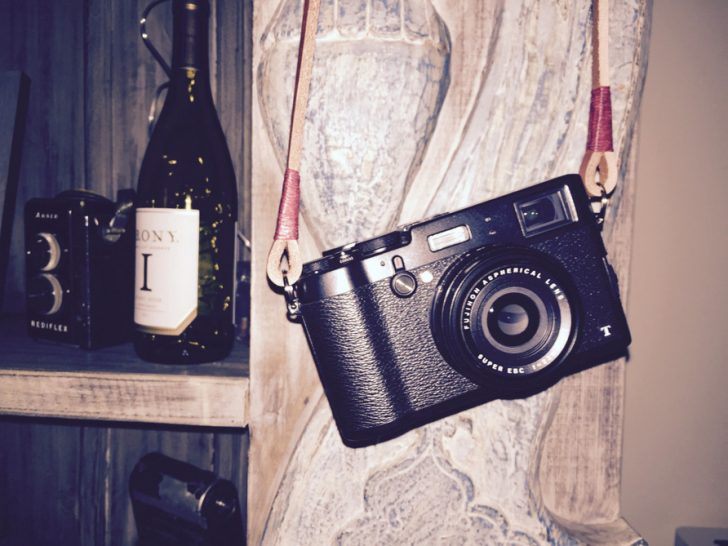
Manchmal knallt bei mir eine Sicherung durch. So auch vor wenigen Tagen, als ich innerhalb von wenigen Minuten den Entschluss fasste mir eine Fuji X100S zu kaufen. Ich besitze bereits eine Olympus OM-D, mit der ich sehr zufrieden bin. Wozu noch so eine Taschenkamera? Diese Frage beantworte ich gerne mit einem Zitat meines geschätzten Fotofreundes Stephan Spiegelberg: “Haben ist besser, als Brauchen”. Nein, ich brauche die X100S nicht wirklich, aber wenn das Haben-Wollen-Gen aktiviert wurde, bin ich leider nicht mehr Herr meiner Sinne. Es musste also so eine kleine Retro-Kamera her und zwar sofort. Eine Anfrage bei Fuji auf ein Testgerät würde mir zu lange dauern, selbst auf Amazon wollte ich nicht warten und klapperte daher ich einige Fotoläden ab wo ich dann auch fündig wurde. Bereits auf dem Heimweg schaltete sich langsam mein Gehirn ein. Warum habe ich jetzt 1.200,- € auf den Kopp gehauen? Das war doch vollkommen unnötig. Wie erkläre ich das meiner Frau? Prompt ereignete sich dann auch bei meiner Heimkehr ein kleiner Dialog, in dem meine Frau die Frage stellte: “Nur damit ich es verstehe. Du hast doch diese kleine Olympus-Kamera. Wozu brauchst Du die dann?”. Meiner Frau an den Kopf zu knallen, dass Haben besser als Brauchen ist, könnte mitunter in einer Nacht auf dem Sofa enden und so erklärte ich ausschweifend, dass ich gerne eine Kamera haben wollte, bei der kein Objektiv vorne absteht, die also in die Innentasche passt. Also eine, die immer dabei ist. Wohlwissend, dass man auch vor die OM-D ein Pancake schnallen kann. Aber wen interessieren schon Details……
Fazit
Ein Ende zu finden ist gar nicht so einfach, wenn man sich so intensiv mit einer Kamera auseinander gesetzt hat. Allein die Länge dieses Tests zeigt wie sehr ich die Kamera mag. Hätte sie mir keinen Spaß gemacht, hätte ich sie wohl mit einem Dreizeiler abgestraft. Sie hat es aber die Aufmerksamkeit verdient, denn es ist ein tolles Gerät. Fuji hat viele kleine Macken des Vorgängers beseitigt und ein sehr rundes Produkt auf den Markt gebracht. Besonders gut gefällt mir die Optik und Verarbeitung, die Bildqualität in Punkto Schärfe und Rauschverhalten, natürlich die 1/4000 Sek. Synchronzeit und die Größe in Verbindung mit der Bedienung. Einige Punkte sind durchaus auf der Negativ-Seite zu verbuchen, keiner davon hält mich jedoch von einer Kaufempfehlung ab. Wem die Kompaktheit mit der Festbrennweite zusagt, sollte sich die Fuji X100S unbedingt näher anschauen. Was mache ich in Zukunft mit diesem Fotoapparat? Es wird ein ständiger Begleiter, der sowohl Urlaubsknipse als auch Hochzeitsreporter ist. Mein Hund liebt die Kamera und ich daher ebenso. Manchmal denkt man ja “früher war alles besser”. Wenn ich so ein Gerät in der Hand habe, freue ich mich aber in der heutigen Zeit zu leben. Ach so, Video … ja, hat sie auch.
See on neunzehn72.de
03
Optically fantastic provided you correct the distortion. I’m talking about the WCL-X100 wide angle converter which converts the X100 23mm lens to a 19mm lens (which means it becomes a 28mm equivalent). The build quality of this converter is excellent. It just feels like a solid hunk of metal and glass, with construction matching the X100/X100S body/lens. As the WCL-X100 simply screws into the front of the X100/X100S lens, the focus and aperture rings are the ones on the “normal” lens. The WCL-X100 has no markings on it at all. It accepts 49mm filters, the same as the official Fujifilm filter adaptor, so the official lens hood can be used on the conversion lens. Optically, with one exception, this converter is very good. CA and fringing are almost non-existent. There is a little vignetting wide open that disappears as you stop it down. In terms of sharpness, it’s pretty similar to the X100/S lens – average at F2 but becoming excellent past F4. Unfortunately there is some barrel distortion which you can correct in camera for jpegs, but a profile is required for RAW files. I would like to say thank you to “Hector” who uploaded a lens profile for this lens to Adobe Lens Profile Downloader. It seems to work well enough. I realise many of these shots need keystone correction, but in the absence of capture one support there is not a lot I can do. Autofocus speed seems to be very quick with the adaptor fitted. By way of an aside (and nothing really to do with the WCL-X100), I tried switching to continuous autofocus to see if that speeded up AF. It does, AF on the X100S is actually as fast as the E-M5 (no mean feet) in good light. Yes and no. The 28mm focal length is more challenging for street photography but does give you that little bit more to play with. I do prefer 35, but there are times when 28 is a definite preference. This is a really nice, well built piece of kit that is definitely worth getting if you plan to travel with your X100/S. The only downside (for me) is that it is relatively expensive and you need to tell the camera it is fitted.
See on sgoldswoblog.wordpress.com
03
Conclusion
The Fujifilm X-E1 is a camera that aims right at the heart of old-school photographers stuck in the new age. It employs a rangefinder design that is sure to attract many, but at the same time, its bulky, block-like design might not appeal to some part of the audience. But moving past the form factor, the images out of the X-E1 are absolutely stunning, requiring little to no editing for any sort of colour or contrast enhancement. The noise levels remain fairly low even through the highest ISO’s and Fujifilm’s X-Trans sensor does a good job of simulating film grain to lend an old-school look to the images (if needed).
The lens ecosystem Fujifilm has built for the X-E1 is quite nice, with a strong initial focus on prime lenses. There’s a 14mm f/2.8R, an 18mm f/2.8, a 35mm f/1.4 and a 60mm f/2.0 Macro. Fuji’s already added the 18-55 zoom and plans on bringing a 55-200mm f/3.5-4.8 and a 10-24mm f/4.0 in the latter half of 2013, along with a new 56mm f/1.4 prime lens as well. All in all, the X-E1 is a superb camera with excellent image quality, but we just wish the AF module could keep up with the sensor’s performance. It would also be nice if the continuous AF mode just track focus and shoot off frames when the shutter button is pressed, instead of working on reacquiring AF. Leaving these few quirks aside, the X-E1 is one hell of a camera, a mirrorless that can actually function as a substitute to the bulky DSLR for many users. If you’re in the market for a DSLR, or want a camera system that will give you great images, then you might want to look at getting the X-E1.
See on networkedblogs.com
02
Overall conclusion
The XF 14mm F2.8 R is a relatively rare example of a genuinely wideangle, high quality prime lens for any camera type other than full frame SLRs. The closest comparisons lie with the Olympus M.Zuiko Digital ED 12mm 1:2 for Micro Four Thirds and Pentax’s smc DA 15mm F4 ED AL Limited for its APS-C SLRs, both of which also offer premium metal-barrelled construction and ‘proper’ manual focus rings with distance and depth of field scales. Indeed the 14mm’s push/pull manual focus switchover mechanism bears more than a passing resemblance to Olympus’s version. They’re not strictly alternatives, of course; they all work on different camera systems. But of the three, the 14mm offers the widest view.
The 14mm is a pretty expensive optic, so needs to perform well to justify its price. Thankfully, it does just that – in fact it turns out to be an exceptionally good lens. At the apertures you’d most often shoot a wideangle it’s exceptionally sharp right across the frame, and it’s almost perfectly-corrected for distortion and chromatic aberration. Vignetting is quite strong at F2.8, and never quite goes away on stopping down; however it’ll only be visible to RAW shooters, as it’s corrected automatically by the camera’s JPEG processing. The drop-off in brightness across the frame is also quite gradual, rather than abrupt in the extreme corners, which means that visually it’s not so objectionable anyway.
Perhaps the nearest the lens has to a real flaw is rather soft edges and corners when shot at F2.8. This could be a real problem for photographers who shoot a lot handheld in low light, especially as there’s no image stabilization available. But as sharpness picks up dramatically even at F4, and wideangles can safely be shot at relatively slow shutter speeds without fear of camera shake (allowing use of smaller apertures without having to raise the ISO) we suspect it won’t be too much of a concern for the majority of users.
Autofocus isn’t especially fast, but it’s very accurate, and for many typical uses of a wideangle lens focus speed isn’t especially important anyway. Manual focus is extremely well-implemented; the focus ring is well-damped and very responsive, making precise manual focusing very straightforward. Switching from auto to manual focus is very quick, requiring just a quick pull back on the focus ring. This reveals a distance and depth for field scale for zone focusing, which many users will be pleased to hear is calibrated conventionally, as opposed to the very conservative version Fujifilm displays in X-system camera viewfinders.
One point worth knowing, though, is that there’s no way of combining auto and manual focus, so you can’t use AF to prefocus then make adjustments manually. Instead switching the lens from AF to manual resets it to the last-used manual focus position. But again, this is a function that’s arguably rather less useful on a wideangle lens than on a telephoto. Overall the 14mm offers perhaps the most convincing implementation of MF we’ve yet seen on an ‘focus-by-wire lens, and is streets ahead of the existing XF lenses.
Build quality is very good, with the metal-skinned barrel and chunky metal focus ring offering a real feeling of solidity. On our sample this was slightly let down down by rather loose click-stops on the aperture ring, making it too easy to change by accident. Of course with the aperture setting constantly displayed in the viewfinder there’s less risk of shooting lots of images at the wrong setting, but this does demand you get into the habit of checking your settings whenever you take the camera out of the bag for shooting.
See on www.dpreview.com
02
Is the Fuji X100s for you?
This is a question that has multiple answers. The Fuji X100s certainly has a distinct character of its own. If you need more than just the 35mm-equivalent lens, then you’re better off checking the Fuji X-Pro 1 (B&H) which has similar wonderful image quality, or the Fuji X-E1 (B&H). The Fuji EX-1 with the kit zoom lens is about the same price as the Fuji X100s (B&H). So it is a strong contender for your attention. But the Fuji EX-1 doesn’t offer the Hybrid Optical Viewfinder. The OVF is such an amazing part of the X-1 Pro and the X100s that it is something that would sway me. There is a slight lag with the EVF that is disconcerting to a long-time DLSR user that is used to the optical view in the viewfinder. You have to get used to to the Fuji X100s to really appreciate it. The camera handles very well, and the controls such as the aperture ring and shutter dial are beautifully crafted and properly placed. BUT, you have to get to know the camera, and you have to get to know the menu. There are all kinds of gotchas that will trip you up initially. For example, I wanted to show the hybrid optical viewfinder (OVF) to a friend, but I could only get the electronic viewfinder (EVF). It took me a while to figure out I had accidentally engaged the macro mode. Then you only see the EVF. This makes sense. Because the Fuji X100s doesn’t give you that direct view of your scene like a DSLR would (via the mirror and prism), you get parallax error the closer you get to your subject. By the time you’re in Macro mode, you need to see exactly what you’re going to get, and then you need to look at the EVF. Fuji makes that your only option then. Rightfully so. But you need to know about this, or else spend a while foolishly going through the menu to try and figure out why the OVF doesn’t show. So in many such ways, you have to take the time to know this camera. But once you get there – and it isn’t a difficult camera to get to know – this little gem is a pleasure to work with. It is a very capable camera with wonderful image quality … as long as the single focal length isn’t a limitation. The Fuji X100s is a camera for the photography enthusiast in all of us. And let’s get a little elitist about it – yes, this is a camera for the the connoisseur. If you love photography and the toys, you will find this camera very appealing. The the Fuji X100s looks sexy, and it feels sexy .. and better yet, makes *you* look sexy. And that’s worth the price of the camera already.
See on neilvn.com
02
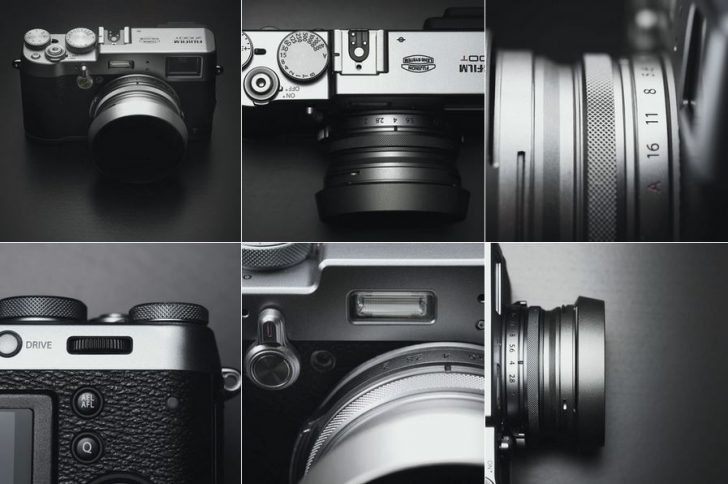
The X100S uses the same body as the X100; it’s no lightweight and can only be considered compact compared to a dSLR, but the extra heft of the well-built body imparts a solid, grippable feel. And of course it’s got the cool retro design that makes you feel like an old-school street shooter. The only outward difference from the older model is the replacement of the raw override button with a quick-menu button, so the X100S now has the same interface as the rest of the company’s cameras. But that small change plus the aforementioned tweaks to the manual focus have significantly improved the shooting experience. It still has the great manual aperture dial on the lens as well as shutter-speed and exposure compensation dials on top; in its default configuration, the Fn button brings up the ISO sensitivity options. Despite the retro look of the front and top, the back has the typical layout of a digital camera. On the left side is a switch for selecting among manual, single-shot autofocus and continuous AF. The AE button brings up metering choices, while AF lets you choose the AF point (when in the default area AF mode). The jog dial Command Control in the upper right cycles through the zoom view, split viewfinder and peaking view in manual focus. While I still dislike the command dial/navigation control, which is nearly impossible to operate without fumbling, shooting doesn’t require nearly as much menu hopping as it did for the X100. The self-timer doesn’t sit with the drive modes, but it does appear in the Quick Menu, which is as good if not a better location. Movie recording resides under the drive modes, though, and there still isn’t a dedicated record button. You can lock most of the back controls by holding down the menu button for a few seconds, which is a nice touch, but the “sorry I’m locked” screen should really indicate how to unlock it. I locked the controls by accident and lost an evening of shooting trying to figure out how to unlock them to turn off the flash. I had to look it up in the manual. One minor irritation I had with the X100 but didn’t mention before persists: the battery compartment isn’t keyed to a particular direction. Though the battery itself is asymmetrical, the compartment is rectangular, and it’s not clear which way the battery goes in; you have to memorize that it’s label-side out. It’s too easy to put it in backward.
Conclusion
There’s enough improved in the X100S over the X100 that I think it’s worth the extra money over the now-reduced-price model: it delivers better performance, photo quality and usability. While the photo quality and lens can’t match that of the Sony RX1, it’s still a great camera at $1,000 less. And though I haven’t yet tested the Nikon Coolpix A, that camera lacks a viewfinder, which for some folks may merit the X100S’ extra cost.
See on reviews.cnet.com
01
I am a happy owner of a Fuji 60mm XF macro lens for a month by now. Here I will write down the most common experiences what I had with it.
All of these pictures what you see, are the original jpegs. Just right from the fuji X-E1.
Lets start with the bad news. The autofocus is far from good. It is slow, and sometimes it has difficulties to find the focus even in normal light. It can struggle really hard. I found for the best solution if I switch to manual mode. Like that I can focus with the AE-L/AF-L button, and in the same time I can override manually. It worked quite well like this. The manual focus is really strange… But not as terrible as the people write it on forums. (Except when you need to focus from the closest of the fairest distance. That is awful.)
Before it I used a 105mm Vr Nikkor, so I can make some comparison….
Conclusion:
It is a very well built, tough little lens. With very good sharpness and details. The autofocus sometimes is a pain, but in manual focus it’s working well. Mostly when you use it for close subjects. (And for what else would you use a macro lens? By the way, it wouldn’t be bad for portraits too. I will use, I am sure!) Actually the use of the manual focus and the electronic viewfinder together, was absolutely amazing for macro photography. I think, we will work very well together with this lens.
See full article on lightandnaturephoto.com
01
Ca y est, je l’ai, le fameux FUJI X100s. Depuis seulement deux jours déjà. Ce sera mon troisième bébé dans la série X de FUJI. Cette évolution du tout premier né de la gamme était attendue après la sortie du fameux grand frère : le X-PRO1. Je vais tenter de vous faire partager mes premières impressions malgré, je vous l’avoue, un engouement presque indicible.
Un “S” qui veut dire “Sublime” ?
Cela faisait déjà plus d’un mois que j’étais devenu orphelin en me séparant de mon fidèle x100. Il est parti dans d’autres mains. Lorsque j’ai déballé la boite de son remplaçant, j’ai retrouvé avec joie son joli design. Mis à part le “S” et le “made in Japan” déplacé en bas du boitier, rien de bien nouveau esthétiquement parlant. Je le dis et redis, même si je dois pour cela me répéter, mais FUJI a signé il y a 2 ans un magnifique compact rétro. J’en suis tombé raide dingue. Et depuis, je me sépare plus jamais de l’un d’eux.
L’évolution apportée par FUJI sur ce nouveau modèle, une “simple” évolution, peut paraître pour certains anecdotique. Dans les faits, c’est un peu plus que çà et je vais tenter de vous l’expliquer. Sachez que, si vous êtes déjà possesseur d’un X100, il faudra toutefois revoir certaines habitudes. Et oui, une évolution ergonomique et fonctionnelle a été opérée et vous allez devoir vous y faire. Rassurez-vous : ce n’est que du bonheur. Pour faire court : désormais, vous avez un X-PRO1 à optique fixe entre les mains. Pas mal non ?
Je commence par faire l’inventaire du matos dans la boite : tiens, pas de carte SD?
Je déballe la batterie déjà en partie pré-chargée : je remarque la présence d’un petit détrompeur visuel orange sur l’un des côtés de la batterie. Cependant, là encore, il est relativement facile de se planter de sens lors de son insertion.
Bon, allez, j’insère une carte SD de 6Go en EXTREME PRO, ferme la trappe, et passe au petit réveil du boitier en poussant le bouton “ON”. J’entend un “kzzzz”, et s’affiche l’écran de démarrage. Ca y est ! C’est son premier souffle…
Je soupire de bonheur :)
http://bit.ly/10sjrOW
See on photo.fusina.net
01
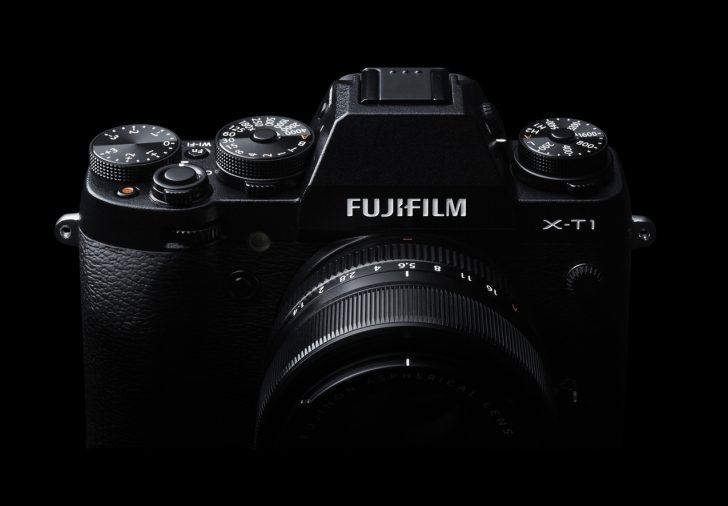
The Fujifilm X-E1 is the second mirrorless model from the company to use the X-mount. It was launched in September 2012 and has the same rangefinder aesthetic and analogue controls as its forerunner the X-Pro 1. In many ways the X-E1 can be seen as a slimmed down, more affordable version of the X-Pro 1, lacking the former’s hybrid optical viewfinder, but sharing most other features including the same 16 Megapixel APS-C X-trans CMOS sensor. Though it’s lost a hybrid optical viewfinder, the X-E1 gains a very impressive electronic one in its place. An OLED design with 2.3 million dots, it ranks alongside the Sony NEX-6 as one of the best EVFs currently in use. One of the biggest criticisms of the X-Pro 1 was its slow AF performance and Fujifilm has moved quickly to address this issue with improvements that claim focus times of 0.1s. X-Pro 1 owners will have been delighted to see similar improvement rolled out in a firmware update for that model. The X-Pro1 launched with three X-mount lenses and Fujifilm has announced announced two more including the Fujinon XF18-55mm f2.8-4 R LM OIS, the first zoom for the system, and the standard bundle for the X-E1. These bring the total number of X-mount lenses at the time of writing to five, with a further five planned for release in 2013. With its retro looks, analogue controls and unconventional sensor you might think the X-E1 was a niche product, but it’s a strong competitor for a range of mirrorless compact system cameras including the Olympus OM-D E-M5, the Sony NEX-6 and NEX-7, and Canon’s EOS M. In my review I’ve compared it with the Canon EOS M. Like Fujifilm, Canon is a recent entrant to this market. Its EF-M Mount has only a couple of lenses (though with an adaptor you can use your EF lenses) and, like the X-E1 it has an APS-C sensor. But there the similarities pretty much end. The EOS M lacks a viewfinder, has a touch-screen and is a thoroughly contemporary design more in tune with a modern compact than a 20th century rangefinder. This should prove to be an interesting head-to-head. Do these two radically different approaches to mirrorless compact system camera design appeal only to personal subjective notions of how a camera should look and perform, or is there more to it than that? Read my full review to find out…..
See on weeder.org
01
Shortly after arriving back from India the kind people at Gulf Photo Plus called to let me know that my Fuji X100s had arrived and was waiting for collection. This was a full month earlier than expected so hat’s off to them for managing to get the first shipments to the UAE. I had been looking forward to Fuji making this camera ever since I got my hands on the X100 a brief two years ago. Any one that has owned or used the X100 will know that while a little frustrating at times, is capable of producing some great images if you put in the time to learn it’s unique charm. The x100 has been my, and I dare say a fair few other photographers “go to” camera when size and discretion is the order of the day.
For me where the X100 really shone was at night, on a tripod, the somewhat slow auto focus and cumbersome procedures didn’t factor in this environment, in fact it somehow made the process all the more enjoyable, mechanical almost. Even using a tripod in a busy city environment never seemed to attract too much attention, just the occasional “how old is that camera” comment from the heathen uninformed. To illustrate my point, have a look at these images shot in Sydney & Brisbane last year. These are all JPEGS straight from the camera with no post production whatsoever. For a camera costing less than USD 1400 these images have no business being this good straight from camera, but there you have it. Obviously there is the constraint of having only one focal length, but for night photography this little powerhouse leaves a lot of SLR’s costing 3 times the price wanting. So roll on 2013 and enter stage left the new & improved X100 which has gained a red S to it’s monicker, perhaps the red color is a little jibe at Leica – it should be, because what Fuji have done here is truly remarkable. It would seem Fuji’s design boffins have trawled the online forums, noted what photographers grievances were with this camera, then quietly gone ahead and fixed them all – ALL. Genius! Who would of thought R&D could be so simple? Other camera manufacturers should really take note! Even things that didn’t really need any TLC have been extensively rethought – take the leather case. Don’t want to take the main case off the body to change the battery or memory card ? be gone lazy man problem. Thankfully Fuji haven’t touched the body design at all, as the form and size of the original was bang on the money IMHO. The only thing missing is a lock on the exposure compensation dial as was missing on the original. Very easy to knock that sucker out of place and over expose yourself as it were. An add on thumb grip easily solves the problem though. Talking of accessories, and we all love those – check out Really Right Stuff they have just released a brilliant L Plate/Grip set for the X100/S, it’s extremely well made and designed, and while adding a little weight and bulk, it’s inspires much more confidence in the handling of the camera. If you use your X100S with a tripod frequently this is worth the expense. An order placed online with Really Right Stuff arrived in Dubai safely 4 days later. Can’t recommend their service and products enough…..
See full article on leoedwardsphotography.com