Travel Photography

Bolivia Remembered | Flemming Bo Jensen

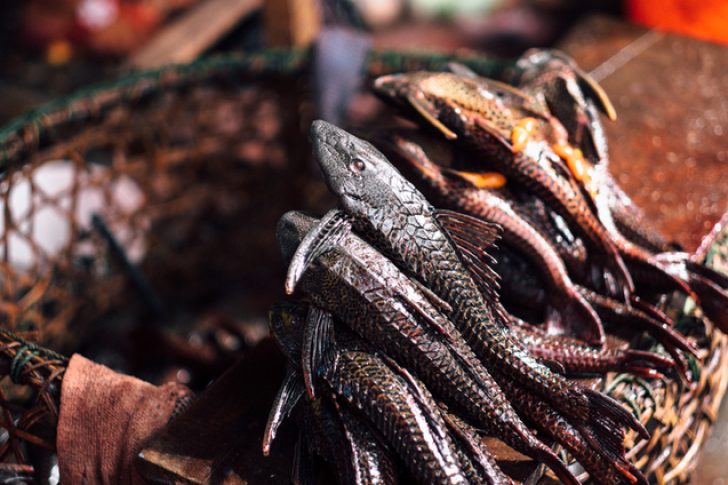
Bolivia, Santa Cruz de la Sierra, December 2011. The camera stares at, grins at me lying on my hostel bed in tropical heat–I shoot angry glares back. The camera has been kicking my butt every day for some weeks and I hate it right now. Despise photography. But I need to pick it up and go create something. Need an outlet. A dark storm hovers in my mind, I am depressed, all purpose seems lost and recent events including a suicide made me fall in a black hole devoid of all light. I walk the world feeling completely disconnected from human life. Despising myself and my existence. As always, light this bright casts some very dark shadows. Despite an abundance of sun light in tropical Santa Cruz I have been in the shadows for days. I like extremes–I seek extremes. Fitting then I guess, that I am in the darkest of moods in the brightest of warm tropical weather. Get out. Walk. Standing still never worked for me. Must keep moving. Or shadows catch up. Grab the damn camera and walk, walk the streets of this hot, weird and interesting melting pot of a city. Get out of this hostel from hell. Walk, damn legs, walk. A market appears. A gigantic chaotic market bigger than any market I have seen in Asia or anywhere else. A world inside a world. No hiding here. Not a single gringo in sight anywhere. I break out the camera. Channel my darkness into looking, seeing, shooting, making images…..
 
Memories are funny. These words are written about a year after the images were made. And I want to return to Bolivia. Have been on my mind recently. Calls me back. It is one of the hardest places to work in that I have experienced. I was in a dark, dark place for the 10 days I was there. But it was a very interesting place filled with awesome people and places of contrast and extremes. That’s why I want to return of course. The challenge. And I need the extremes. To create. To feel alive.

See on www.flemmingbojensen.com

Barry Island in the winter sun, shot with the Fuji X-E1 | Amy Davies

I’ve never really appreciated how close I am to Barry Island before – but one Wednesday, the sun miraculously came out for the perfect winter day.

I love beaches in the winter, they’re less busy, you’re not sweating and there’s no chance of getting a beach ball in the face. True, you can’t really go swimming, but as I’m usually busy photographing, that doesn’t bother me. I was reviewing the stunning new Fujifilm X-E1, one of my favourite new cameras of the year. Using this new compact system camera is a real joy, and at the end of this day I couldn’t decide what I loved more – the camera, or Barry Island.

It had been miserable weather for the previous few days, and bizarrely, it returned to misery for the few days after this. But for this one day, I enjoyed my time walking around the beach in the cold. People don’t usually think of Barry Island as somewhere beautiful, but hopefully these photos show that if you look hard enough you can find the beauty in everything. I walked around the cliffs to find Jackson’s Bay, a more secluded beach which only me and a lone fisherman seemed to be aware of on the day.

So, next time the sun comes out and I find myself with a spare couple of hours, I’ll be heading down to the beach to soak up the winter rays. And, maybe, just maybe, I’ll go back in the summer too.

I hope you enjoy the pictures, and as always, any comments, suggestions and thoughts are most welcome in the box below.

See on amydavies.com

X-Pro 1 at the 2012 Pushkar Camel Fair – Rajasthan, India |
Tim Steadman

Two weeks ago, I traveled to Pushkar for the annual Camel Fair. For 8 days, I was armed with only my X-pro 1 , the 18mm f/2, and the 35mm f/1.4. This was my first experience working extensively with the X-pro 1. It felt different. Last year I walked the grounds of the Pushkar Camel fair armed with a Canon 1D Mark II with a 70-200 2.8 IS and a Canon 5D with a 16-35 II f/2.8. A 35mm 1.4 and a 50mm 1.4 were stowed my backpack. I came away with images I really liked, but also came away each night with a sore neck and back and an ever growing frustration of hauling so much stuff. For one day I decided to carry just my 1d Mark II with the 35mm 1.4 to “free myself.” It saved my back but not quite my neck and I still felt like this big camera was all people looked at when I first approached them to have a chat, ask questions, etc. I needed something less obtrusive. Along came the X-pro 1 that I purchased a few months ago. The Pushkar Camel Fair was the first event I felt I could give it a good working test and compare its performance and image quality with the performance and images I shot last year with my Canon gear. I also wanted to see how it held up in the sandy elements of the desert. I am very pleased with the results. The image quality, I feel, with the X-Pro 1 and 35mm f/1.4 combo is as good as the image quality of my Canon 1D Mark II and 35mm 1.4 combo. I love this. Performance wise, the auto focus SPEED with the X-pro I doesn’t even compare. It is slow in the world of pro SLR’s but then again, for travel, I am usually not shooting anything that is moving fast, so speed is not an issue. It is not too slow to frustrate me in any way…especially since the firmware update a couple months ago. I have found that shooting in manual AF mode and using the AEL button for auto focus is a bit faster and easier. The auto focus ACCURACY with the X-Pro 1 is great. Once it locks on, it’s good to go. I took 2-3 extra shots in certain situations early on in the camel fair just to make sure I got one in focus as I was a bit skeptical. All the images came out tack sharp. Very nice! ….

See on timsteadmantravel.squarespace.com

3 Days with the Fuji X-1 Pro in Dubai | Björn Moerman

Courtesy to Gulf Photo Plus (GPP) in Dubai, I got to take the FujiFilm X-1 PRO for a three day test run earlier this week…

They give the camera on loan, for a nominal fee of 150AED. A no brainer if you are on the fence of buying, especially since they provide a full refund if buying a unit through them! I’ve been on the lookout for a lighter travel/street photography camera for the last 12 months. It was the renown Atlanta based photographer Zach Arias which I first heard talking about this camera at a GPP event earlier this year. The post is by no means a full camera review but rather a collection of some thoughts are having used the camera over a three day period. I suggest you check out the dpreview X-1 PRO review for a full multi page review.

Even though the size of this camera compared to a full frame body like my Nikon D800, is relatively small; it is by no means an ordinary point a shoot! The X-1Pro is a mirror-less camera with interchangeable lenses, that has a large size APS-C CMOS sensor. I got to test all three prime Fuji lenses, 18mm f2, 35mm f1.4 and the 60mm 2.4 Macro/Portrait lens. This allows for a real shallow, DSLR like, depth of field like in the image above! If properly exposed it shows no signs of noise up to ISO1600 and with just a tiny bit of noise reduction images up to ISO6400 are more than useable! Because the camera is that much smaller, one can almost be invisible like in the images above shot at the Dubai Fishmarket and in the Dubai Metro. Most of the images have all been shot in the RAW format. Even though Lightroom does not have the different camera profiles like what is available for the Nikon and Canon DSLR’s the RAW image quality and colour accuracy is extremely good! What surprised me even more is the quality of the in-camera jpeg rendering. Especially the Black and White Film simulation modes… Fuji is known for its Black and White Film and this clearly shows in this digital camera! Even though the auto-focusing is a bit slower than most DSLR’s, it is more than adequate and once focus is achieved, it is right on!

Conclusion:
Will I be buying this camera? No, but I do have a the newer FujiFilm X-E1 with the 18-55 f2.8/f4 zoom lens on order. This camera has exactly the same sensor as the X-1Pro and is even a bit smaller and lighter, due to the lack of the Optical viewfinder (OVF). By the way, on the X-1Pro, I did hardly use the OVF and really like how the Electronic Viewfinder (EVF) works. Will it replace my full frame Nikon D800? No of course not. For the moment there is clearly room for both. The X-E1 will go on my travels whenever I need to go light. I do however believe that the D800 might be the last DSLR body I bought. The future of the mirror-less is surely exciting and I sincerely believe they will eventually replace most if not all DSLR bodies.

More images from the three days can be found here.

See full review and pictures on bjornmoerman.blogspot.fr

Kinsale | Johnny Patience


October and November have been very busy months. I was stuck in client projects for a long time and after these were finished, Rebecca and I worked on the relaunch of her website. Even though that all was a lot of fun (check out the cool preview tool we developed), my beloved X-Pro1 was sitting on my desk the whole time making these sad eyes at me.
 
This week we finally had two days off work and sun. Rebecca got the X-E1 meanwhile and we took both Fujis with us and went to Kinsale for a day (you can find her pictures here). This was the first real outing with the X-Pro1 and I have to say that I’m really impressed. It does almost everything better than my Nikon. The level of details, the colors and the dynamic range are so much fun to work with. The only thing I am still adjusting to are the different field of view (crop sensor vs. full frame) and the depth of field (50mm f1.4 vs. the equivalent of a 50mm f2.0).
 
All the shots below were taken with the Fuji X-Pro1 and the Fujinon 35mm 1.4 lens
 
See all pictures on www.johnnypatience.com

Market at Night, Central, Hong Kong | Ariel Broitman


Sample images with Fuji X-E1 by Ariel Broitman
 
See pictures on www.ariel-broitman.com

Zanzibar Portraits | Guillermo Hakim Photographs

People depicted in this series include students, carpenters, farmers, traders, metal workers, fishermen and textile workers in the informal sector in Zanzibar. All pictures taken with a Fujifilm X Pro-1 with a 35mm F1.4 lens

More pictures here:

See on guillermohakim.photoshelter.com

From the African veld to the concrete jungle | Adrian Seah

The difference could not be more stark, after 2 months of being surrounded largely by nature, mountains, forests, the ocean, deserts and mostly small towns, I find myself thrust into the third largest city on the planet, São Paulo. Where there was the silence of the night, occasionally punctuated by animal sounds, now police sirens and the low mechanical drone of twenty four hour traffic are omnipresent. Where there used to be mile after mile of arid bush, now people fill every square inch of available space, all going about their separate chores. This was supposed to be familiar territory for me, having grown up in Singapore and living in London, but someone, it seems strangely alien, perhaps what the prodigal son might have felt when he first arrived home, a sort of reverse culture shock perhaps. I know my mind will switch modes to accomodate The City but for now, the African bush is a temptress in my head.

Adrian Seah:
I left my job as an advertising Creative Director in August 2012 to travel Africa and South America for a year with my wife, documenting these beautiful places with my Fuji X-Pro1.

See on handcarryonly.com

Hà Nội Streets | Tewfic El-Sawy

See on Scoop.itFuji X-Pro1

If there’s anywhere that lives life on the street, it’s Hanoi.

So here is a gallery of 12 monochrome photographs made in its streets. For these I used my Fuji X Pro-1 and the Fujinon 18mm f2.0 lens and most were shot from the hip. I didn’t know this while on my last month’s photo expedition-workshop, but it’s said that Hanoi’s Old Quarter consists of 36 streets (in reality, there’s almost twice that number), each originally named for a traditional trade, and those eventually forming guilds. For instance, Hàng Muối (salt) Street was where the salt traders converged to sell their ware. Not surprising, since Hanoi’s Old Quarter has a history that spans 2,000 years.This has now changed to a great extent, with some exceptions such as Hang Bac street (which I walked up and down many times) and that was and still is where goldsmiths and silversmiths plied their craft/trade. Most street names in the Old Quarter start with the word Hàng. Hàng means merchandise or shop. In Vietnamese, the formal term for street is đường phố; the latter word not be confused with its delicious signature soup, but which is a staple of its streets.

See on thestreetleica.wordpress.com

Testing the Fujifilm X-E1 – The Perfect Travel Camera? | Bert Stephani

See on Scoop.itFuji X-Pro1

My style, my clients and my way of working have changed a lot since I started out as a professional photographer about eight years ago … and so has technology. Therefor I started a major gear bag audit a couple of months ago. I thought I’d share my thought process with you in a couple of blog posts. Check the posts about my current main camera: the FujiFilm X-Pro1 and the camera that will be my second camera soon: my first impressions of the X-E1 and the X-E1 Improvisation Street Shoot. In this third and final (at least for now) part of my Fujifilm X-E1 review, I’ll take a look at it from a travel point-of-view. The X-E1 is definitely a camera that has created a lot of interest in the world of travel, reportage and documentary photography. Being so light, small, unobtrusive and yet produce great images, makes the X-E1 a good companion for on the road. To test out this assumption we decided to take a little family weekend trip to Slagharen in Holland. Off-course our family doesn’t like to visit attraction parks at all, we just do it to test out equipment for you Let me show you some pictures and write down some observations. I keep being impressed by the way the Fujifilm sensor renders skies and clouds. There’s a lot of detail in the RAW-files that can be recovered in post processing. I know there are still some issues with the Fuji files in Lightroom (4.2). Usually I don’t worry too much about it as the problems are barely noticeable unless you pixel peep. But in situations like with these pictures you sometimes get these white outlines around objects like the wind turbine on the right when you try to push the RAW file. If you ease back on the post-processing, it’s gone but I’m sure Adobe hasn’t unlocked the full potential of the Fuji RAW files yet. I hear Fuji and Adobe are working together on providing better results, let’s hope they get it right soon…..

See on bertstephani.com

Page 5 to 8« First...34567...Last »